



Richard Erdman’s Marble Sculptures and Their Communion with Nature
October 22, 2025
There are sculptors who shape stone—and then there are artists like Richard Erdman, who seem to listen to it.
Erdman’s marble sculptures do not merely imitate natural forms—they seem to emerge from them. Flowing, organic, and fluid, his work doesn’t just coexist with nature—it converses with it. Like rivers carving through valleys or wind shaping sand, his hands follow a logic deeper than design: the logic of the Earth itself.
A Sculptor Guided by Natural Movement
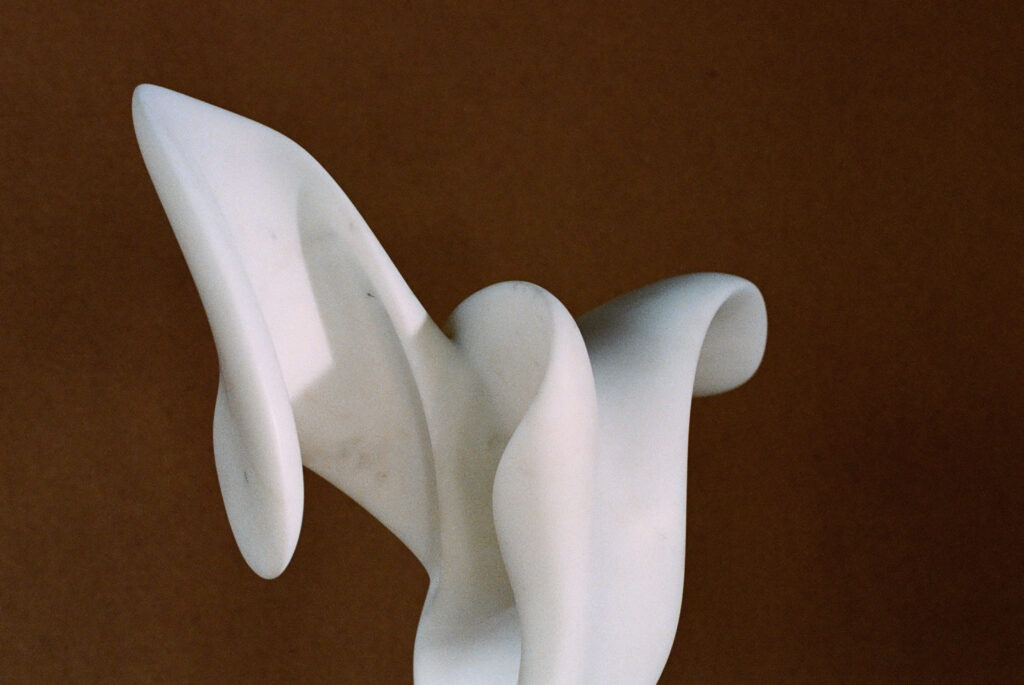
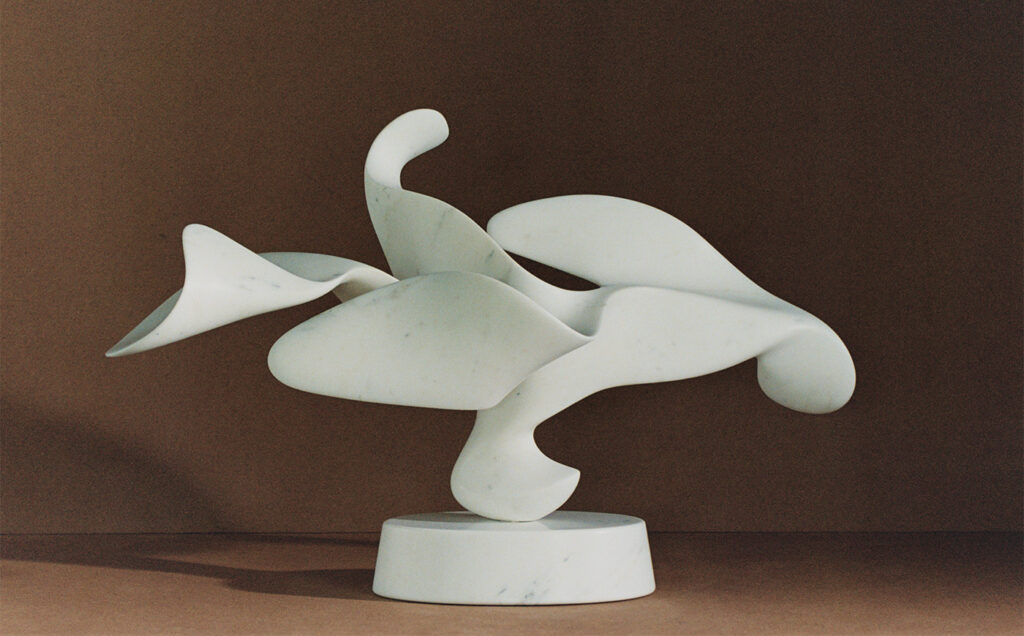
Erdman’s forms often feel like they’ve been caught mid-motion—curves that echo tides, arcs that feel wind-swept, voids that invite light and shadow like a grove of trees. Yet none of it is literal. He doesn’t sculpt waves or cliffs. Instead, he carves the essence of movement and time.
His marble sculptures suggest rather than demand. And that’s their power—they engage your imagination as much as your senses.
Unlike figurative sculpture, which often imposes meaning onto stone, Erdman’s work listens for it. In his studio practice, there’s a sense that the marble has something to say—and Erdman aims to coax it out.
Why Marble? A Medium of Time and Tension
For Erdman, marble isn’t just material—it’s metaphor.
Carved from ancient quarries, each slab holds the silent testimony of millennia. Fossilized minerals, subtle veins, and geological memory—all of it is embedded in the stone. Rather than treat this as an obstacle, Erdman considers it a collaborator.
His approach is akin to choreography. He shapes, polishes, and pierces the stone until it seems to move—not with speed, but with purpose. The result is sculpture that breathes. Not in a literal sense, of course—but in the way a mountain breathes, or a canyon does: slowly, endlessly, without need for language.

Setting the Sculpture in Nature—Or Is It the Other Way Around?
Erdman’s marble sculptures don’t just exist in nature—they seem to complete it.
Whether situated in a lush garden, a reflecting pool, or a minimalist interior space flooded with natural light, the work doesn’t compete with its surroundings—it amplifies them. The negative space in his sculptures allows the environment to pour through, making sunlight, air, and even silence part of the experience.
In many ways, the work teaches us how to see more deeply, to slow down, to notice.
Abstraction with a Soul
“Abstract” doesn’t quite capture the warmth or emotional resonance of Erdman’s sculptures. Each piece is an invitation—a portal to stillness, flow, and contemplation. His use of marble—traditionally associated with permanence, weight, and monumentality—becomes paradoxical. His forms are light, airy, sometimes even precarious. They push marble to the edge of what it can do. They ask: What if stone were weightless? And remarkably, under his hands, it is.
A Modern Voice in an Ancient Tradition
Although Erdman’s work feels deeply modern, he walks a path carved by centuries of stoneworkers—from ancient Greece to the Italian Renaissance. But where those traditions often celebrated the human form, Erdman has shifted the focus back to something more universal: the rhythms of nature. In his marble sculptures, we don’t see people; we see presence. And perhaps that’s what makes his work so poignant: it offers a reprieve from a loud, busy world.
Final Thoughts: Stone as a Living Language
Richard Erdman’s marble sculptures are more than objects—they are conversations. Not loud or urgent, but enduring. They ask us to slow down, to notice, and to remember that the Earth, too, is always creating. In Erdman’s hands, marble is not just a material—it’s a message. One that speaks not of power, but of presence. Not of dominance, but of deep listening. If you ever stand before one of his works, listen while you look. Marble whispers.
Please contact our Director Abbey Meaker at [email protected] with any sculpture inquiries.