


Restless History of Muse
February 24, 2026
MYTHOS OF MUSE
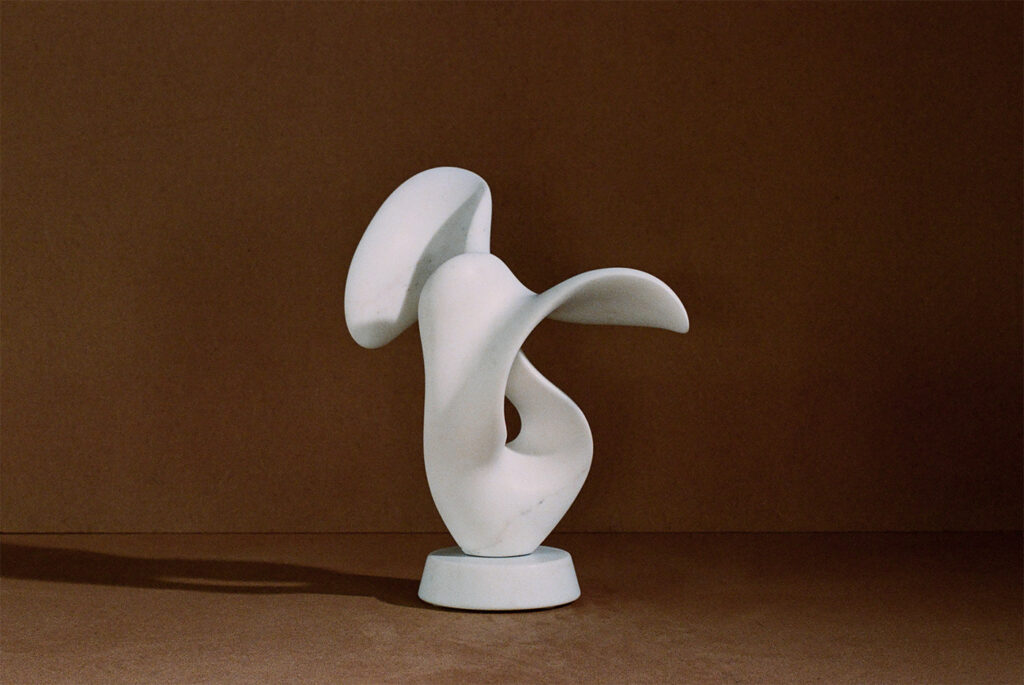
Richard’s sculpture titles are not meant to suggest or frame meaning. They serve the work, a final punctuation mark on a life that exists beyond the becoming of the piece, as if the title were unearthed from the marble, just as the marble was extracted from mountains.
Across an unbroken restless history
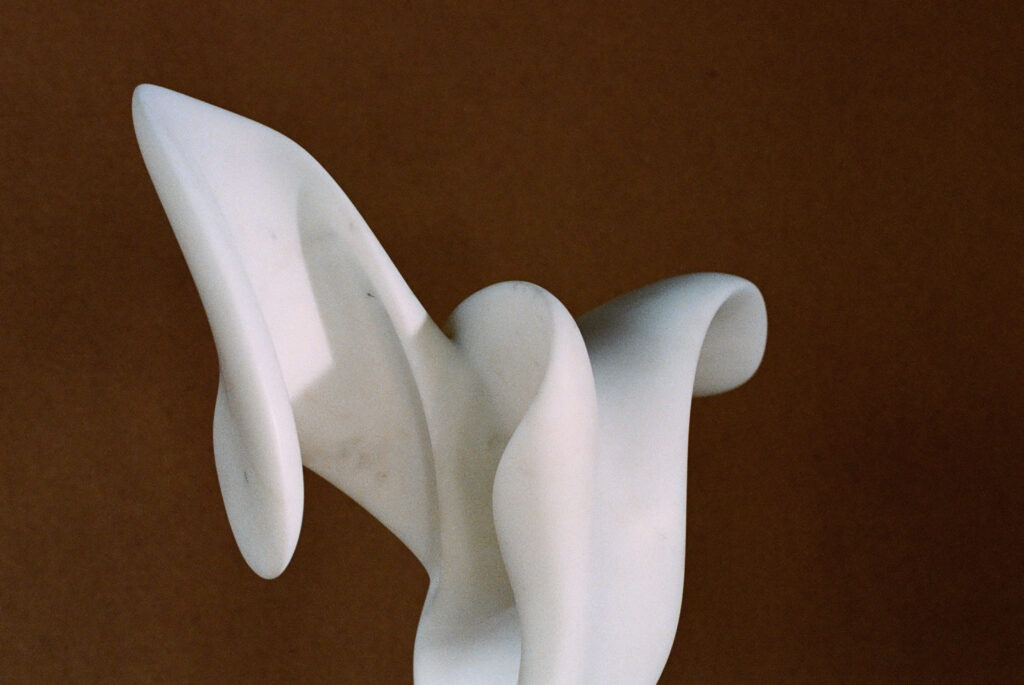
A name emerges once the essence of a piece has revealed itself. Some titles are more abstract than others; Muse is rich with mythological and art historical significance. Here, the title is neither prescriptive nor literal. Instead, the sculpture unfolds and opens a door to a world of ideas and meanings. It becomes an entry point—an unfurling ribbon of marble that grazes all associations, images, and material layers.

Karel Škréta Apollo and the Nine Muses Surrounded by Poets on Mount Parnassus, later 17th century
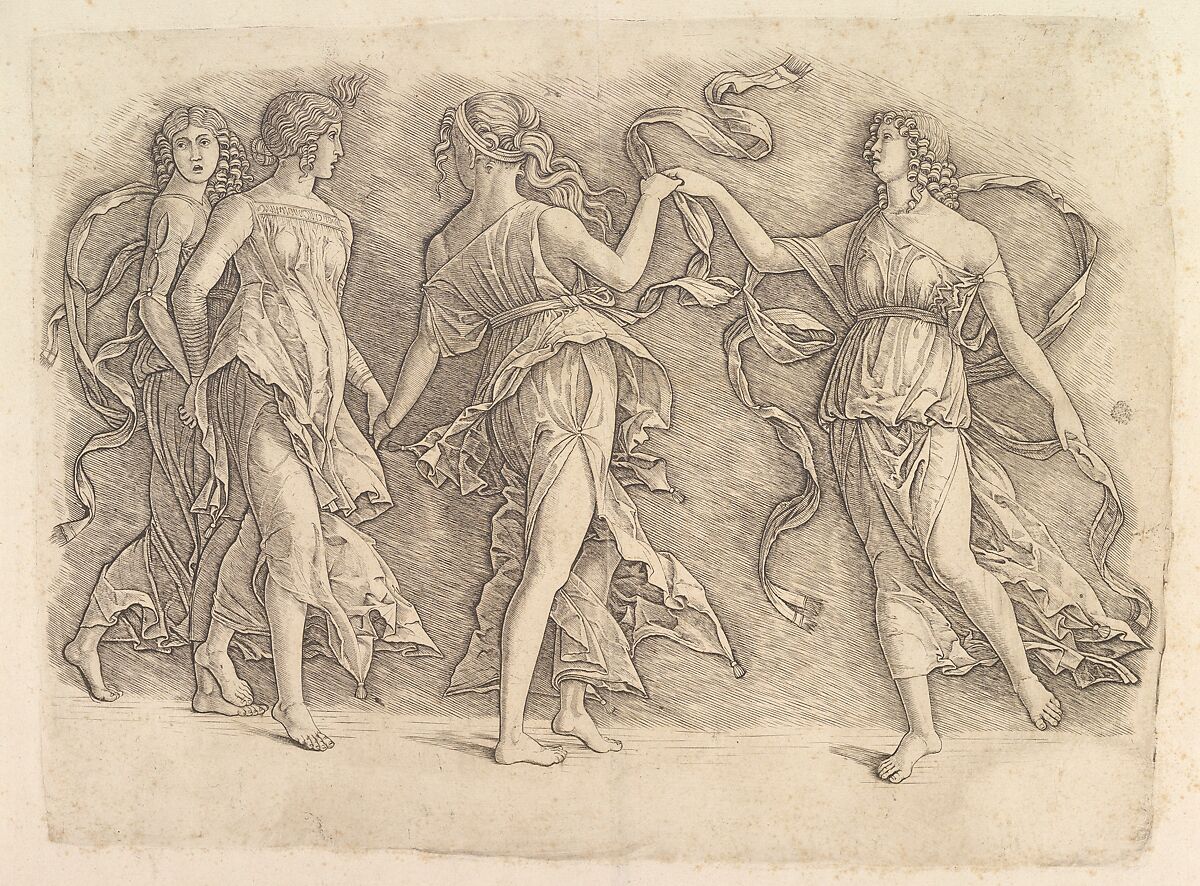
The accompanying works trace the muse across an unbroken, restless history. From ancient Greece, where it is represented in marble with the authority of an ancient witness, to the seventeenth century, when allegory still dressed inspiration in celestial imagery. Later historical paintings blur the images and draw from them symbols of dreams, surreal explorations, and depictions of desire.
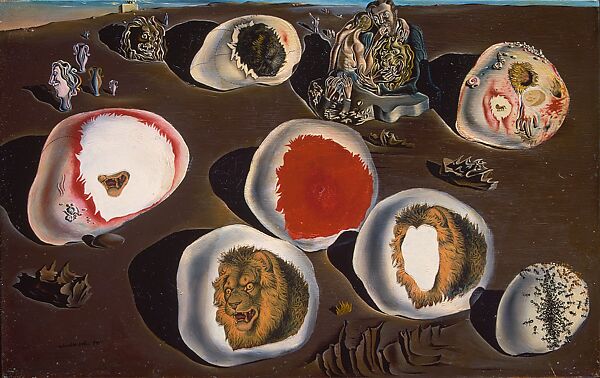
Salvador Dali The Accommodations of Desire, 1929
In ancient Greek mythology, The Nine Greek Muses, daughters of Zeus, the king of the gods, and Mnemosyne, Titaness of memory, were believed to be custodians of the arts and the originators of song. In Ancient Rome, the Muses were a central subject of both sculpture and painting. Their likeness was captured in the sculptures at Hadrian’s Villa, constructed in 120 CE in modern-day Tivoli. It was there in the 1500s that the carvings of eight of the nine Muses were unearthed. Depicted seated, they likely decorated a small theater on the villa grounds.

In Apollo and the Muses on Parnassus (1784), Raphael Morgen gathers the figures into an idealized assembly, situating artistic creation within divine harmony. The fresco proposes inspiration as something structured and communal—a choreography of figures within a perfected cosmos. In The Allegorical Portrait of Anna of Austria as Minerva (1640s), Simon Vouet reinterprets the muse as a symbol of intellectual virtue.

Raphael Morghen
Apollo and the Muses on Parnassus, 1784
the muse hovers between apparition and projection

Simon Vouet Allegorical Portrait of Anna of Austria as Minerva, 1640s
By the nineteenth century, the muse had become more of an interior experience. In Hesiod and the Muse (1891), Gustave Moreau renders inspiration as an intimate encounter: the poet bends toward a spectral presence, neither fully embodied nor entirely abstract—the muse hovers between apparition and projection.
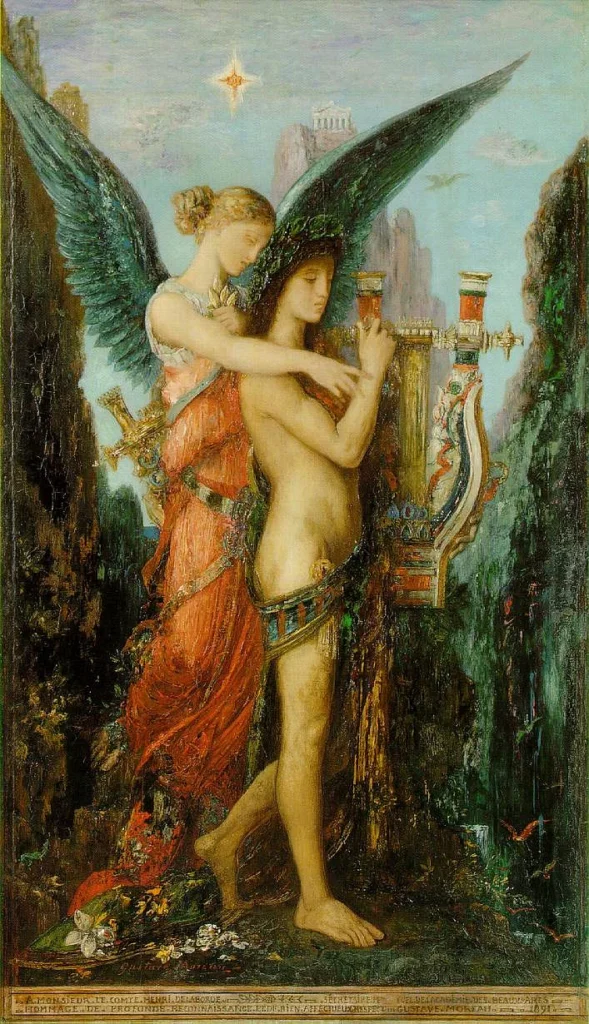
Gustave Moreau Hesiod and the Muse, 1891
The twentieth century fractures the figure altogether. Pablo Picasso’s Le Rêve (The Dream, 1932) reveals a primal, erotic distortion, fragmented through the lens of modern desire. The body was both a site and a cipher. In The Lovers (1928), René Magritte obscures intimacy itself, suggesting that the muse may be an unknowable, unreachable image–the veiled face of longing, transforming from a stable figure into an atmosphere that is psychological, symbolic, slippery.

Pablo Picasso Le Rêve (The Dream), 1932
Gathered here, history does not merely inform Richard’s work; it keeps it company. Considered together, they create a long corridor of focus through which the concept of the muse shifts from figure to atmosphere to image—from marble to pigment, from paper to celluloid, and then to allegory and dream. Across centuries, inspiration loosens its form, changing from carved authority into the blurry symbolic, to interior projections, and ultimately into an abstract condition.
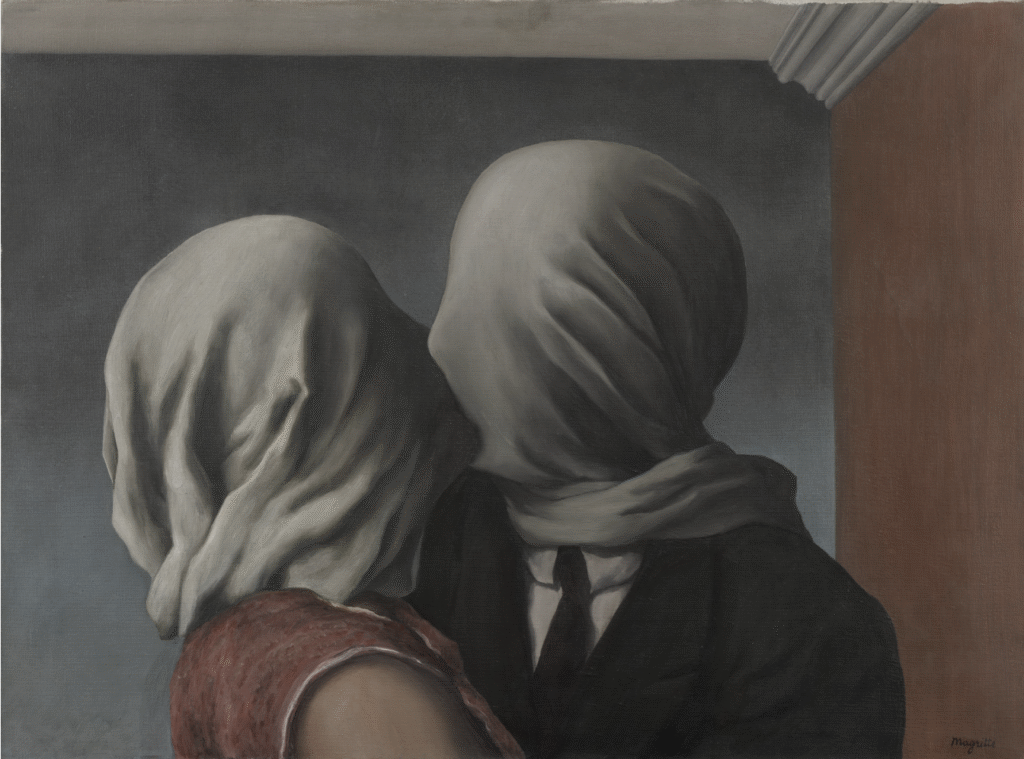
René Magritte The Lovers, 1928
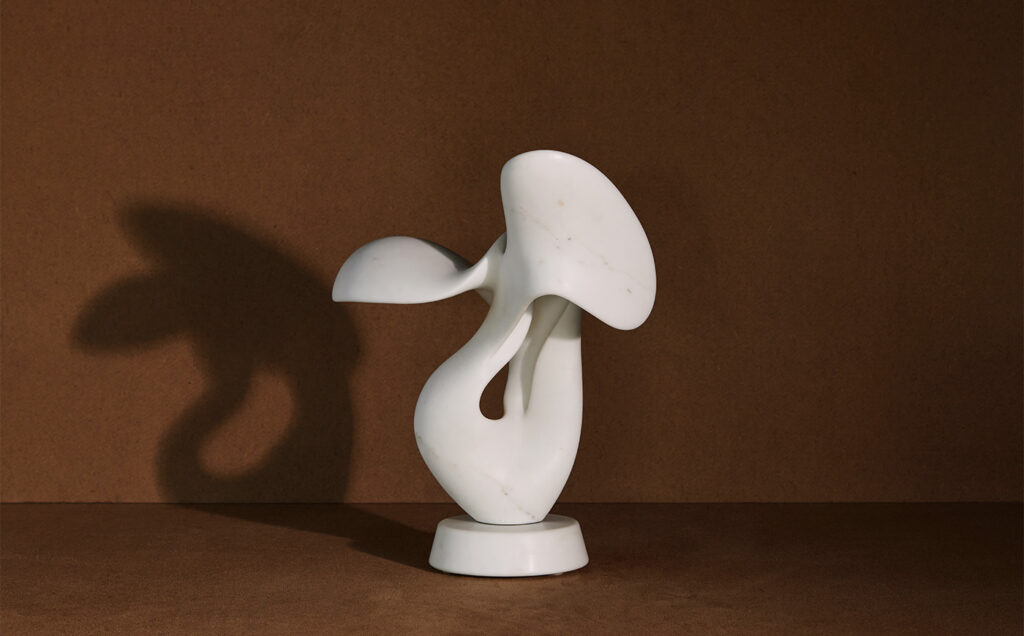
In Richard’s sculpture Muse, the figure dissolves completely. There is no reclined body, no lyre, and no winged visitation. Instead, the muse returns to the material itself—specifically, the marble. The sculpture does not depict inspiration; it embodies it. The title does not name a subject but indicates a state: a heightened attentiveness and a co-creation between hand and matter.
Here, the ancient question surrounding the muse—Is inspiration found or summoned? Is it external or internal?—is brought back into the very substance from which its earliest icons were created. The sculpture becomes both a relic and a symbol of rebirth, holding the memory of allegory while refusing its conventional image. In doing so, it proposes that the muse has never actually been a fixed figure at all, but rather an ineffable and continually evolving force that moves through history, reappearing wherever form gives way to revelation.
Inquiry about this piece:
[email protected]