


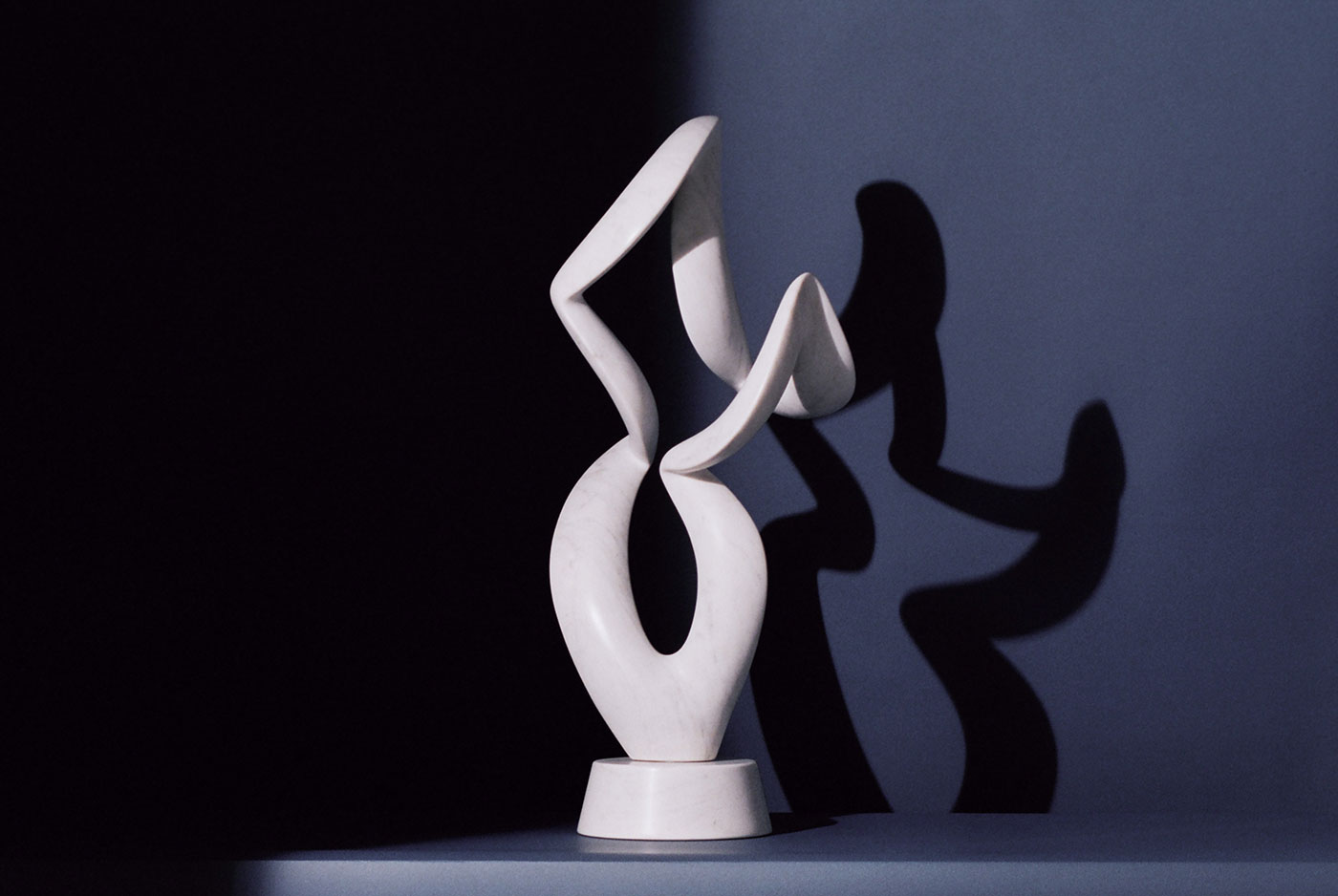
The mystery and great surge of the creative power of spring
March 17, 2026
Le Sacre du Printemps
At the threshold of spring, we consider Richard’s sculpture, Reiybu, alongside the singular ballet, The Rite of Spring. The musical-choreographic work, also known as Le Sacra du Printemps, was created by the Russian composer Igor Stravinsky in 1911. The connection between these two works—Rite and Reiybu—begins with the soft gesture of a dancer and the outline of a musical note, abstracted and unfurling like sound, which then twists and drifts within the vibrant awakening from winter lulls.
-
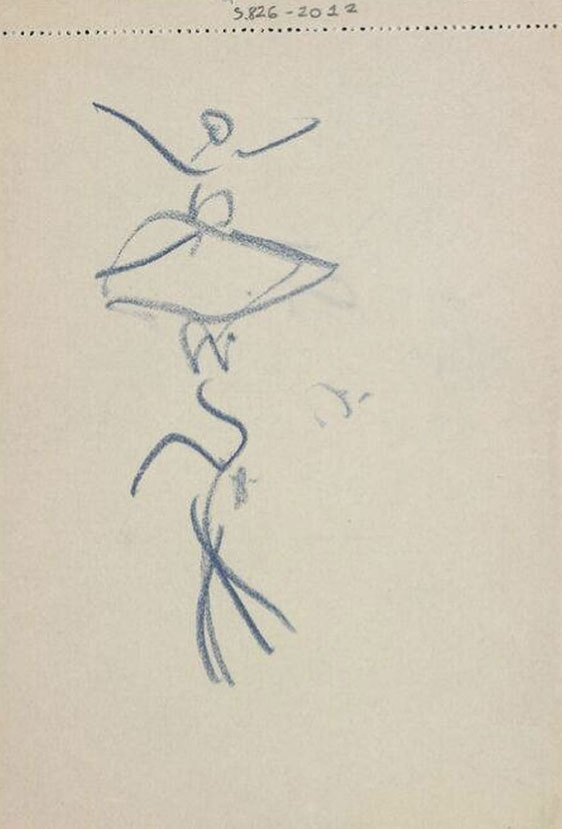
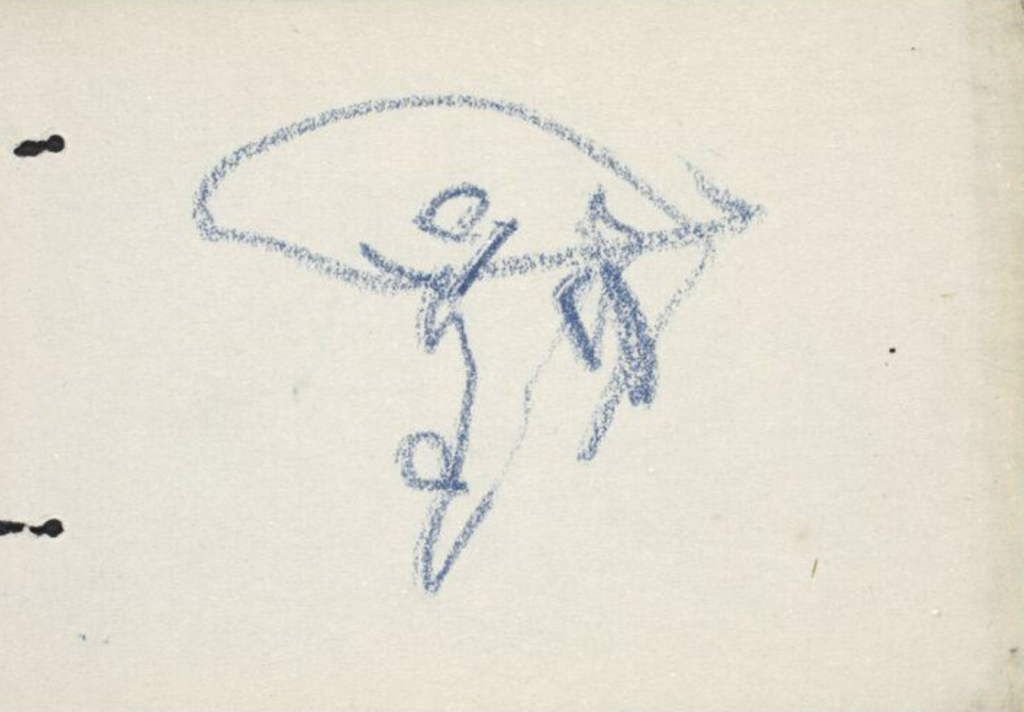
- Page of a sketch book showing blue crayon sketch made in Théâtre de Champs-Elysées during rehearsal or performance of Le Sacre du printemps, Diaghilev Ballets Russes, 1913. Drawing by Valentine Gross.
-
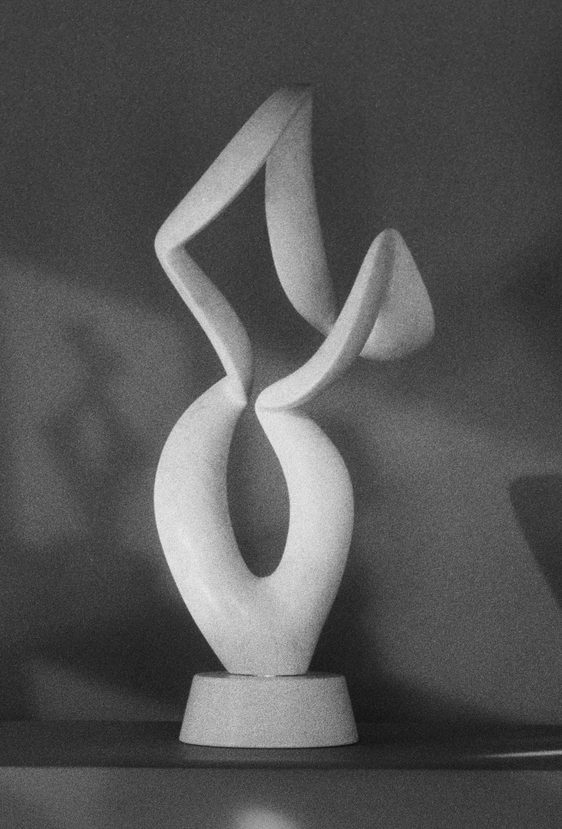
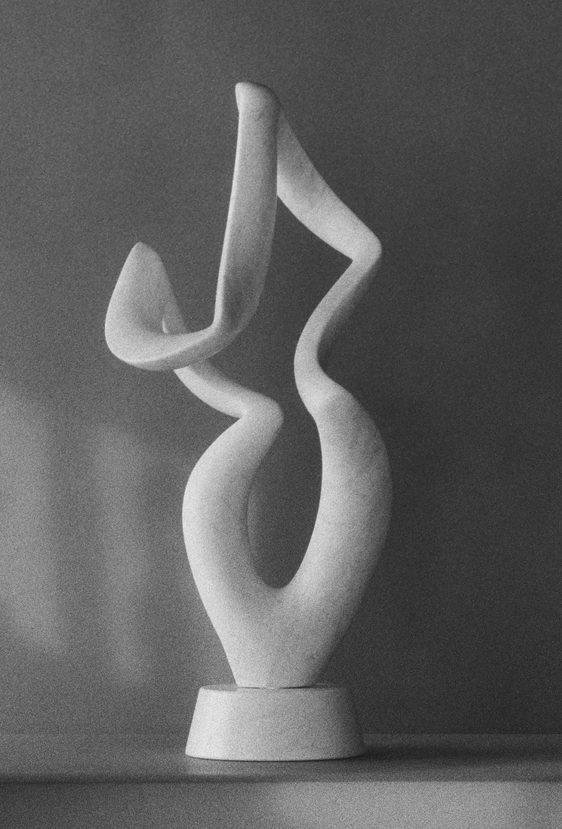
- Richard Erdman, Reiybu, Carrara white marble
A gathering of forces poised on the edge of transformation
When The Rite of Spring premiered in 1913, it did not invite awed absorption as much as confrontation. Igor Stravinsky’s score—percussive, dissonant, tectonic—challenged late Romantic grace with something elemental and entirely new. He described the initial idea as a fleeting vision of a pagan rite, unified by the mystery and great surge of the creative power of spring. That rebel force was immediately and viscerally apparent at the Paris premier on May 29, 1913, when the audience erupted into a riotous storm. It’s recorded that the shouting and fighting drowned out the orchestra, forcing the choreographer to holler counts from the wings so the dancers could continue.
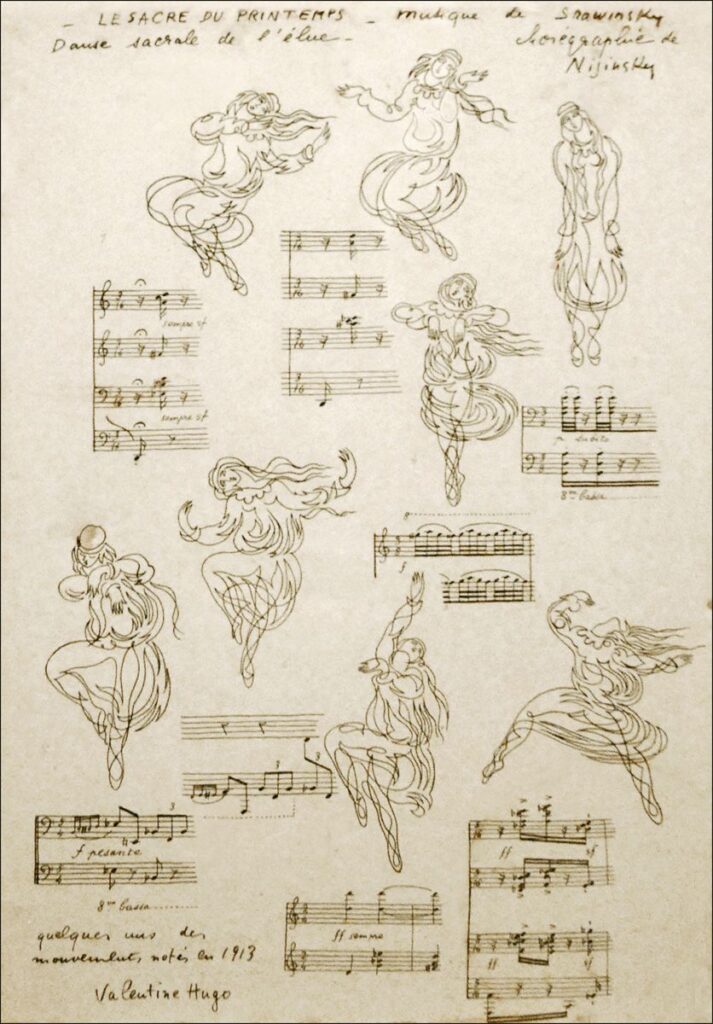
Illustration depicting sections of the score by Igor Stravinsky and poses of the dancers in Le Sacre du printemps, 1913. Illustration by Valentine Gross
The same frenetic energy permeates Valentine Gross’s sketches. Her drawings are not entirely figurative; they capture elusive motion itself. Bodies twist, coil, and suspend in sweeping arcs of ink. The dancers are lines, loose scrawls of movement made visible. They seem carried by an invisible current, animated by an unseen force, echoing Stravinsky’s fervent favor of ritual action and transcendence.
Reiybu exists within this same continuum of creation. Though carved from marble—a material associated with permanence and weight—its form reads as movement, just like the gestural line of the dancers. Its surfaces swelling and tapering as if shaped from within. Stravinsky’s score is famously discontinuous, built from asymmetry and abrupt shifts. Notes drift soft and atmospheric, slowly building into billowing tendrils of sound, into an almost turbulent storm. Like The Rite of Spring—unbound, asymmetrical, yet fundamentally about cyclical renewal—Reiybu balances tension and release, soft architecture. It is not figurative, nor does it communicate one narrative; it embodies a process of becoming, a gathering of forces poised on the edge of transformation. It delivers the mystery and great surge of the creative power of spring.
Seen together, these works articulate a modernist preoccupation with energy rather than representation. Music becomes experience; drawing becomes velocity; and sculpture is arrested time, its own movement. Each abandons romance in favor of something more visceral and immediate, aligning with Stravinsky’s vision of a pre-modern ritual world, where renewal is achieved through intensity and expression rather than introspection.
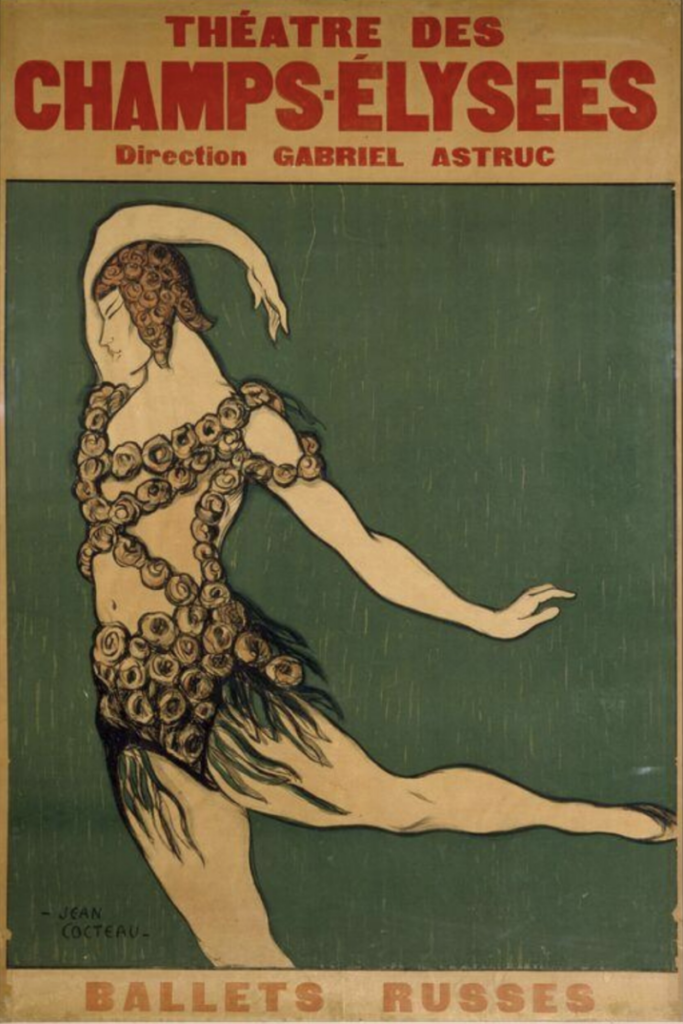
This huge French poster, designed by Jean Cocteau (1889-1963), advertised the sixth Paris season of Serge Diaghilev’s Ballets Russes, 19 May – 23 June 1913 at the Théâtre des Champs-Elysées. It shows the Russian dancer Vaslav Nijinsky (1888-1950) as the spirit of the rose which he danced with Tamara Karsavina in Mikhail Fokine’s ballet Le Spectre de la rose. The 1913 season at the recently opened Theatre des Champs Elysses was the longest given by the company in Paris. It included performances of opera as well as ballet and the controversial premiere of Le Sacre du printemps (The Rite of Spring).
The teeming transformation of worlds unfolding in spring
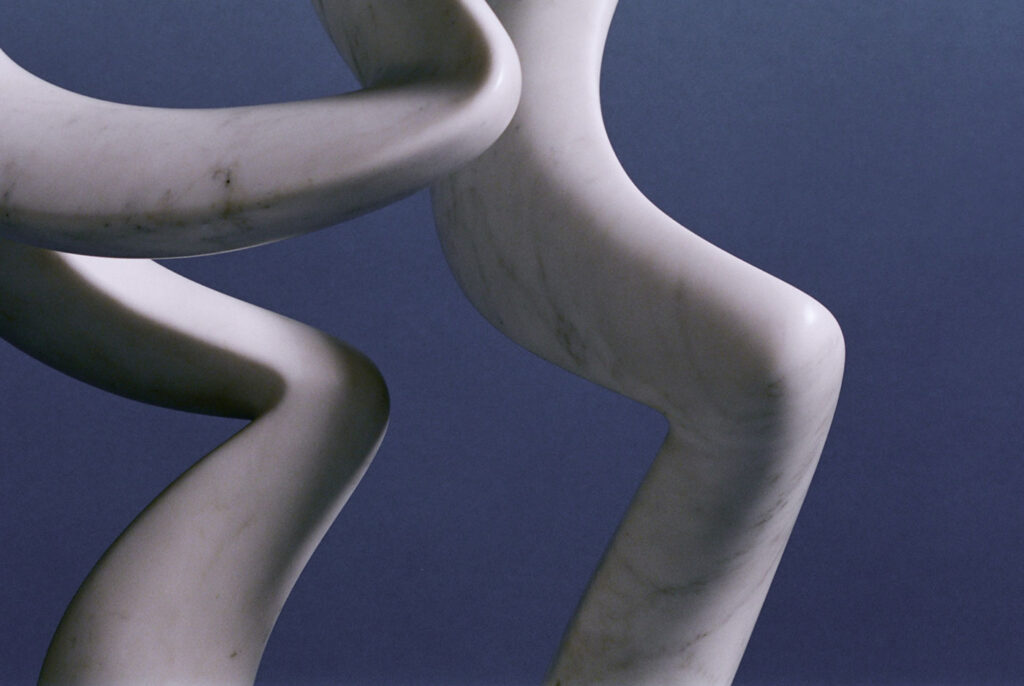
Reiybu (detail)
More than a century later, The Rite of Spring still feels contemporary because it addresses a perpetual phenomenon: the teeming transformation of worlds unfolding in spring. Gross’s lines flicker with that intensity; Erdman’s marble contains it. The result is a dialogue across time and medium about how art can render the invisible mechanics of change—how spring, whether seasonal or symbolic, arrives not subtly but with undeniable force.

Pastel drawing by Valentine Gross showing a moment from the end of the first scene of Le Sacre du Printemps, Diaghilev Ballet Russes, 1913.
Inquire about Reiybu
[email protected]
Sculpture photographs by Lauren Mazzotta